


Therapy for Anxiety
Feeling overwhelmed by all of the pressures in your work and personal life? If you’re constantly stressed, can’t stop worrying, and find yourself trying to control the future rather than let go, anxiety therapy can help you cope, learn new skills, and begin living life to the fullest.
Get StartedMaybe your life seems good on paper, but deep down you feel a pit in your stomach, like something bad is about to happen and you don’t know what or when. Whether you’ve experienced anxiety all of your life (and tried many ways to solve it), or it’s a new struggle born out of an overwhelmed schedule and societal pressures, an anxiety therapist can help you break free from negative thought patterns and find new ways of coping.

What does anxiety feel like?
Anxiety usually feels like dread that won’t tell you what it’s about.
For some women it’s mostly physical. A racing heart. A tight chest, a clenched jaw, trouble falling asleep even when you’re exhausted. For others it lives in the head. You replay a conversation from three days ago. You rehearse tomorrow’s meeting. You check the lock, or the symptom, or the baby, and the relief lasts about ten minutes before you need to check again.
Anxiety never takes a day off. It doesn’t matter if you’re at work, home with your kids, or out with friends. An anxious body doesn’t know when to trade fight-or-flight for calm. That makes it hard to be present with the people you love, and they often feel the tension even when you’re doing your best to hide it.
It’s also easy to miss in women. From the outside you look organized and on top of everything, so nobody sees what it takes to get there. The National Institute of Mental Health reports that 23.4% of women had an anxiety disorder in the past year, compared with 14.3% of men, and a lot of them are dealing with anxiety while everyone around them assumes they’re fine.
What causes anxiety?
There’s rarely one cause. It’s usually a mix of biology, timing, and patterns your brain has been practicing for years.
Hormones matter more than most women get told. Anxiety often shows up or worsens the week before your period, in the months after a baby, or during perimenopause. Estrogen and progesterone help regulate serotonin and GABA, the systems that keep your stress response in proportion, so when those hormones swing, anxiety can spike even when nothing in your life has changed.
Worry is also self-reinforcing. The more you worry about one area of your life, the more it spreads to other areas. And the more you worry, the more you begin to doubt yourself, so the cycle continues.
Family history, chronic stress, and past trauma all play a part too. Plenty of women hear that it’s just hormones, or just stress, and end up dealing with anxiety for years before anyone treats it properly.
Anxiety also takes different forms, and treatment works best when it’s matched to the one you actually have.
Get StartedTypes of Anxiety We Treat
Anxiety wears different disguises. For some women it’s constant worry; for others it’s perfectionism, panic, or checking symptoms at midnight.
Generalized anxiety disorder (GAD). Worry that jumps from your job to your health to your relationships and won’t switch off, even when everything is technically fine.
High-functioning anxiety. From the outside, you’re thriving: organized, ambitious, always on top of things. Inside, you’re running on dread. High-functioning anxiety hides behind achievement, which is exactly why so many women go years without help.
Panic disorder and panic attacks. A racing heart, tight chest, the sudden certainty that something is terribly wrong. Panic attacks are terrifying, you may even mistake one for a heart attack. But they are highly treatable. Therapy can reduce how often they happen and take away the fear of the next one, which is often what keeps the cycle going.
Social anxiety. Rehearsing conversations before they happen. Replaying them after. Dreading the meeting, the party, the phone call. Social anxiety is more than shyness. Therapy helps you stop avoiding and start showing up.
Postpartum anxiety. New motherhood comes with worry, but if yours feels constant, intrusive, or impossible to turn off, it may be postpartum anxiety. It’s more common than postpartum depression, and
we treat both.
Health anxiety. Every headache becomes something worse in your mind. You Google symptoms at midnight, seek reassurance, feel better for an hour then the fear comes back. Health anxiety is exhausting, and therapy can break the reassurance-seeking cycle that keeps it alive.
Think it might be OCD? Intrusive thoughts, mental rituals, and compulsive checking can look like anxiety—but OCD is a distinct condition that needs a different treatment approach. If this sounds familiar, visit our OCD therapy page—our practice has deep expertise in ERP and OCD in all its forms.
Get Matched with an Anxiety TherapistTherapy can help you manage your anxiety and live a more vibrant life.
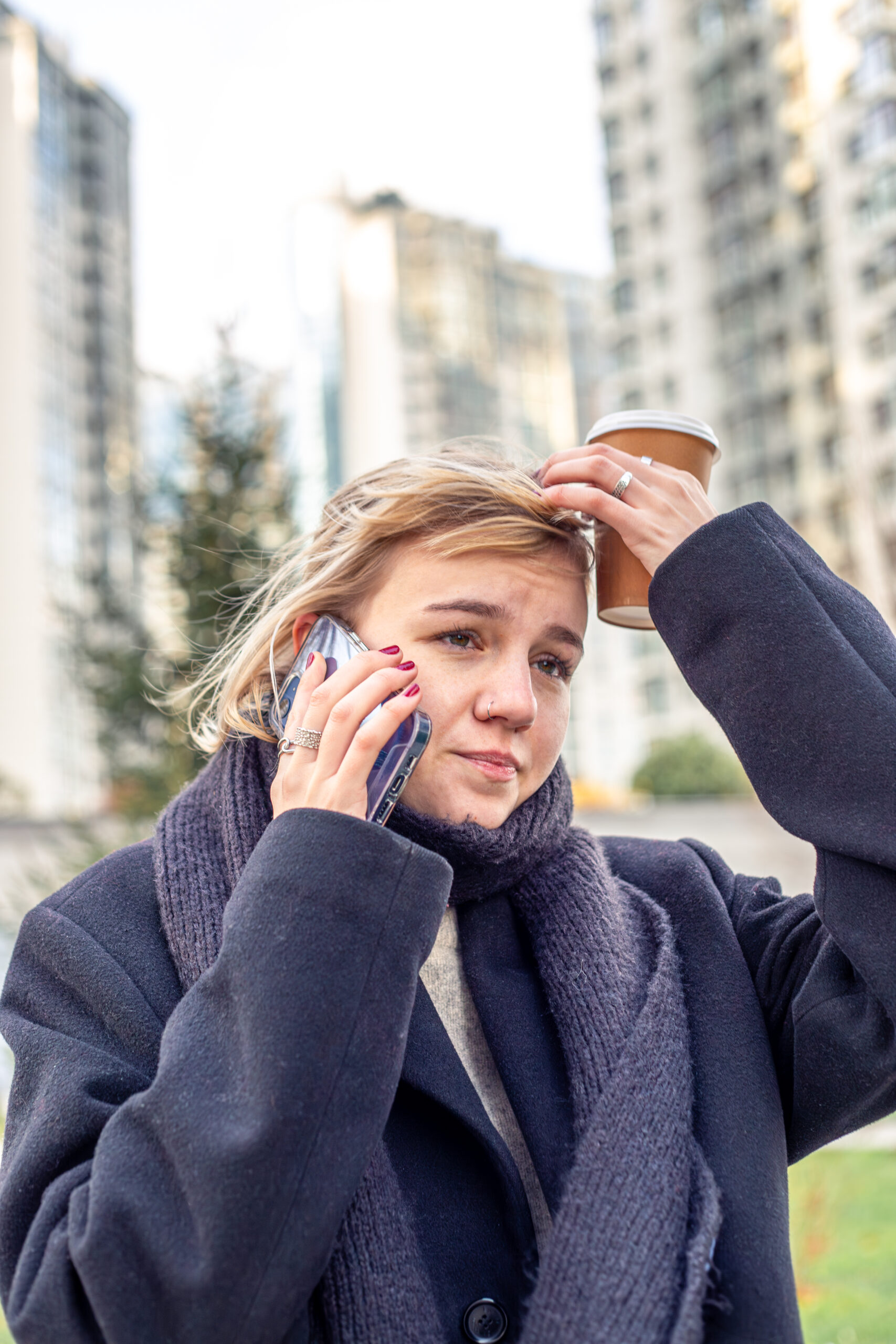
Hustle culture tells us that we have to go, go, and go at all times. That we have to stay in the know, be everything to everyone, and struggle quietly (if at all). Counseling for anxiety is an opportunity to challenge this mindset and find strength and empowerment in letting go of cultural expectations. The goal is for you to slow things down, practice the art of self-compassion, and reconnect with your values so that you can live a more vibrant and authentic life.
Our therapists use an integrated approach that considers how anxiety overlaps with many other issues, including trauma, depression, and OCD. We know that anxiety manifests in many ways, and no two people struggling with it are alike. We know that anxiety can be especially hard to detect in women, since many women have high-functioning anxiety and don’t appear anxious on the outside. Our practice recognizes the subtler signs of anxiety and we understand how our society makes life especially hard on women and mothers.
We don’t believe in just sitting and nodding. We want you to feel seen, heard, and understood, but we also want you to walk away with tangible tools that you can use to manage anxiety on your own. Whether you’re seeking treatment for Generalized Anxiety Disorder (GAD), social anxiety, postpartum anxiety, or any other way it presents itself, we’ll equip you with mindfulness strategies to help you cope, connect with your intuition, and learn to be more present in the moment.
These skills can help you gain the confidence and self-trust to slowly face your anxiety and eliminate the need to fall into avoidance behaviors (drinking, isolating, etc.). This way, your life can expand rather than continue to contract in the face of anxiety.
Get StartedMeet Our Anxiety Therapists

Gabrielle Salomone, LCSW

Fernanda Valentin, LMFT Clinical Coordinator of Old City Office
Pennsylvania, New Jersey & Florida

Zara Khan, MS, LPC Clinical Coordinator of Center City Office
Pennsylvania & New Jersey

Lauren Berardo, LCSW Clinical Coordinator of Main Line Office
Pennsylvania

Arielle Cosgrove, LCSW Internship Director
Pennsylvania, New Jersey & Deleware

Becca Adleberg, LPC Marketing Coordinator
Pennsylvania, Florida & Vermont

Melissa Huff Smoldt, LPC, LMHC PA, TX, DE, SC, NC

Sydney Ciarrocchi, LPC, CCTP Pennsylvania, New Jersey, Florida, Arizona

Aleksandra Freiling, LCSW PA, MA, MO, AZ & UT

Hannah McGrath, MDiv, LPC Pennsylvania, New Jersey & Florida

Jess Heymann, LCSW Pennsylvania

Ashley Gyuriska, LPC Pennsylvania & New Jersey

Valerie Rivera, LPC Can conduct sessions in Spanish!
Pennsylvania

Julie Belling, LCSW Pennsylvania and Virginia

Hannah L. Smith, LCSW Pennsylvania

AJ Sarbaugh, LMFT, CEDS Clinical Coordinator of Virtual Office
California, Texas, & Colorado

Sam Dalton, LCSW Connecticut, Illinois, Massachusetts, Utah, Virginia

Erika Pranzo, LPC New Jersey, Pennsylvania, Texas

Jessica Pinti Dunson, LMHC, LCAS Arizona, North Carolina, Florida

Julia Johnston, LPCC, LICDC Ohio, Georgia, Minnesota, Florida

Dr. Kelly Bradley, PsyD, HSPP Licensed Clinical Psychologist
40 states

Chris Turpyn, LPC NJ, CO, MO, FL, SC, NC, VT

Beth Krieger, LAMFT Pennsylvania

Taylor Pearl, MS, LAC Pennsylvania & New Jersey

Mary Dever, LSW Pennsylvania & New Jersey

Jules Choe-Castillo, LSW Pennsylvania

Gillian Cedrone, LAPC Pennsylvania

Megan Gaughan, LPC Pennsylvania

Sanvi Beri, LPCC California

Kayla Bradshaw, LCSW New York, Pennsylvania & New Jersey

Catalina Martinez Clinical Intern
Pennsylvania & New Jersey

Ashley Mikyska Clinical Intern
Pennsylvania & New Jersey

Lindsay Klenk Clinical Intern
Pennsylvania and New Jersey
What kind of therapy is best for treating anxiety?
We’ll match you with a therapist who will tailor treatment to your own needs and draw from a wide variety of therapeutic approaches. Generally the best therapy for anxiety involves supporting you with one or more of these modalities:
COGNITIVE BEHAVIORAL THERAPY (CBT) —The goal of CBT is to help you understand how negative thoughts and emotions are fueling your anxiety.
DIALECTICAL BEHAVIORAL THERAPY (DBT) —This approach is especially useful for managing severe anxiety and reducing panic attacks. It gives you skills for building up your distress tolerance and developing your resilience.
ACCEPTANCE AND COMMITMENT THERAPY (ACT) —By helping you connect with your values; ACT allows you to become more adaptive and flexible in your thinking. You can stop defaulting to automatic stress reactions and start responding to life more thoughtfully.
EMDR Therapy — EMDR harnesses the brain’s natural healing abilities, allowing individuals to process and integrate traumatic memories in a way that significantly reduces their impact on us.
Exposure and Response Prevention (ERP) — An evidence-based treatment that seeks to slowly and systematically expose you to your fears in a safe and controlled setting. ERP can help you build your confidence so that you can stop relying on your rituals and make different choices when you’re triggered.
No matter which approach suits you best, we believe that you can recover from anxiety and live life to the fullest again. You’ll find this same quality of care whether you book in-person therapy in Philadelphia or South Jersey, or online in one of the 43 states we serve.
Get StartedFrequently Asked Questions
Everyone worries sometimes. The difference is when worry becomes constant, feels out of proportion to what’s actually happening, or starts interfering with your sleep, work, or relationships. If you’re lying awake replaying conversations, canceling plans to avoid stress, or unable to enjoy good moments because your mind is already bracing for the next problem, those are signs worth taking seriously. Many women wait years to reach out because they’re “still functioning.” You don’t have to hit a breaking point to deserve support.
Both. We offer in-person anxiety therapy at our Old City and Center City offices in Philadelphia, our Main Line office in Bala Cynwyd, and our South Jersey office in Collingswood. If you’d rather meet from your couch, our therapists are licensed to provide online therapy in 43 states, so you can keep your same therapist even if you move
Many of our clients notice real change within 8 to 12 sessions, especially with skills-based approaches like CBT and ACT that give you tools to use between sessions. That said, timelines vary based on how long anxiety has been part of your life and what’s underneath it. Some women come for a few months to work through a specific stressor, while others stay longer to untangle deeper patterns. Your therapist will check in regularly about your progress, so therapy never runs on autopilot.
Often, it doesn’t look like anxiety at all. In women, anxiety tends to hide behind perfectionism, overthinking, people-pleasing, and staying busy. It also shows up physically: stomach issues, jaw tension, headaches, and exhaustion that sleep doesn’t fix. Because so many women appear calm and capable on the outside, their anxiety goes unnoticed by everyone, sometimes even their doctors. Our practice specializes in recognizing these subtler signs, which is exactly why we built a team around treating anxiety in women.
We’re an out-of-network provider, which means payment is due upfront and we provide you with a superbill to submit to your insurance for reimbursement. Many of our clients get a meaningful portion back, depending on their out-of-network benefits. Before your first session, we recommend calling your insurance to ask about your out-of-network mental health coverage and deductible. You can find more details on our rates page.
This is a very understandable concern—after all, anxiety makes you afraid to speak your fears out loud. The good news is that therapy is very different from talking to a friend. Our trained clinicians will help you identify the root cause of your anxiety and give you grounding skills so that you can work through anxiety without feeling overwhelmed. What’s more, therapy always goes at a pace that’s comfortable for you—there’s no rush to open up right away!
There are a lot of great resources out there and a lot of useful skills that you can develop on your own. Nonetheless, getting individualized care is very different from learning new life hacks, reading self-help books, or turning to internet advice. After all, a book, a skill, or a piece of advice cannot engage with you as an individual—it can’t address your uniqueness or take your values and goals into account. Our therapists work to personalize the healing process so that you can create the life that you truly want and live according to your personal goals and values.
The decision of whether or not to use medication to help treat anxiety is ultimately up to you and our therapists can provide an expert level of care whether or not you choose to. If you are interested in exploring how anxiety medication can add a layer of support to your therapy journey, we encourage you to speak to trained psychiatrist. If you are local to Philly, our in-house psychiatrist can share more and help you manage medications along the way. We will never pressure you either way.
With the right support, you can live your life to the fullest again.
Our mission is to help you cope with anxiety so that you can be fully present in your relationships and reconnect with your sense of joy.
Get StartedMore Anxiety Resources




Kind Words From Real Patients