






You keep replaying it. The moment things changed, the faces, the sounds, the feeling that your body or your birth plan betrayed you. Maybe people keep saying “at least the baby is healthy!” And you nod, because they’re right, and somehow that makes it worse. If your birth still follows you around months later, you may be carrying birth trauma. As a therapist who treats it, and mom who lived it, I want to tell you what actually helps.

What Is Birth Trauma?
Birth trauma is the lasting emotional impact of a childbirth experience that felt frightening, out of control, or overwhelming. Here’s the part that matters most: it’s defined by how the birth felt to you, not by what’s in your medical chart. An emergency C-section, a scary complication, a NICU stay, feeling dismissed or unheard in the delivery room, all of these can be traumatic, and so can a birth that looked “normal” on paper.
It’s also common. Research suggests nearly one in three women describe their childbirth as traumatic, and about 4% develop postpartum PTSD. There are higher rates among women who had complications or babies in intensive care. So if you’ve been telling yourself you don’t have a right to feel this way because everyone survived, please hear this: your experience counts. Trauma isn’t a competition, and yours doesn’t need anyone’s permission to be real.
When Birth Trauma Happened to Me
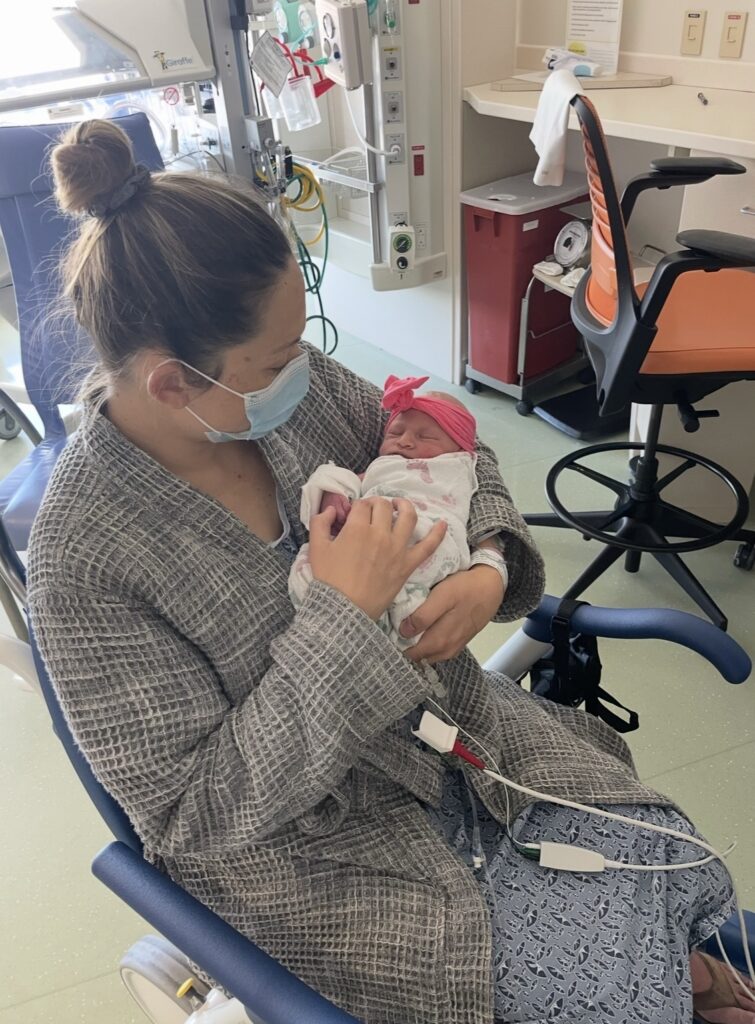
I don’t just know this professionally. During my delivery, I developed HELLP syndrome, a serious pregnancy complication, and my daughter spent her first stretch of life in the NICU. The birth I had planned disappeared, and what replaced it was machines, monitors, and a version of early motherhood I never pictured: visiting my baby instead of holding her and not meeting her for the first 2 days of her life.
For a while, my mind kept pulling me back there. And then I did the thing I now spend my days helping other women do: I got treatment, including EMDR, and it worked. The memories didn’t disappear, but they stopped ambushing me. They became something that happened, instead of something still happening. That’s the entire reason this post exists.
What Are the Signs of Birth Trauma?
Birth trauma doesn’t always announce itself. Watch for:
- Flashbacks, nightmares, or intrusive memories of the birth
- Avoiding reminders, like driving past the hospital, hearing birth stories, or looking at newborn photos
- Feeling on edge, jumpy, or unable to relax, especially around anything medical
- Anger or grief about how the birth went, even when others call it a success
- Feeling detached from your baby, your partner, or yourself
- Anxiety or dread about future pregnancies
Some of these overlap with other postpartum struggles, which is why getting assessed matters. If your symptoms lean more toward constant worry than reliving the event, our post on postpartum anxiety breaks down that difference.
How Does EMDR Help You Heal?
EMDR (Eye Movement Desensitization and Reprocessing) is one of the most effective treatments for birth trauma, and it’s the one that helped me. Here’s how it works: traumatic memories get stored differently than ordinary ones. They stay raw and present, which is why a smell or a sound can drop you right back into the delivery room. EMDR helps your brain finally file the memory as past.
In sessions, your therapist guides you through recalling pieces of the experience while using bilateral stimulation, usually eye movements or tapping. It sounds strange, and it works; the research behind it is extensive. Two things my clients are always relieved to hear, and that I was relieved to experience myself: you won’t have to retell your story over and over, and you stay in control the whole time. Many women notice a real shift within a handful of sessions. The birth becomes something you remember rather than something you re-live.
What Else Helps?
EMDR isn’t the only path. Trauma-focused therapy more broadly helps you process grief about the birth you didn’t get, which is its own real loss. Partners can carry birth trauma too; watching someone you love in danger is traumatic, and partners deserve support, not just a supporting role. And if you’re a NICU parent, the trauma often extends past the birth itself into those weeks of beeping monitors and hard goodbyes at the end of visiting hours. Therapy can hold all of it.
Sometimes symptoms like panic, insomnia, or depression need more support than therapy alone provides. Because we have an in-house psychiatrist and psychiatric mental health nurse practitioner, medication is a conversation you can have within the same team, including honest guidance about breastfeeding compatibility.
Here’s a hopeful stat to hold onto: in one longitudinal study, about three-quarters of women who experienced a traumatic birth recovered rather than developing lasting PTSD, and treatment makes recovery far more likely. Healing is the expected outcome, not the exception.
Frequently Asked Questions
Can I have birth trauma if my baby is completely healthy?
Yes. Birth trauma is about what you went through, not the outcome. Fear, helplessness, feeling unheard, or losing control during delivery can be traumatic even when everyone leaves the hospital healthy. A good outcome and a hard experience can both be true.
Will I have to relive my birth in therapy?
Not the way you’re afraid of. You’ll never be forced to recount every detail, and EMDR specifically doesn’t require repeated retelling. You and your therapist decide the pace together, and you can stop at any point. Feeling in control during treatment is part of the treatment.
How soon after birth can I start therapy?
Whenever you’re ready, and earlier is genuinely fine. Some women start within weeks; others come in years later, sometimes when a second pregnancy stirs everything up. There’s no expiration date on healing birth trauma, and no “too soon” either.
Does birth trauma affect future pregnancies?
It can. Untreated birth trauma sometimes fuels intense fear of giving birth again, and for some women it contributes to tokophobia, a severe fear of childbirth. The encouraging part: processing the first birth often transforms how the next pregnancy feels.
When Should You Reach Out?
If your birth still intrudes on your days, your sleep, or your bond with your baby, that’s reason enough. You don’t need a PTSD diagnosis to deserve support, and you don’t have to wait until you’re planning another pregnancy to deal with the last one.
I know from both sides of the therapy room that this gets better. Contact Therapy for Women in Philadelphia today to schedule a session with a therapist who specializes in birth trauma, through our perinatal mental health team.






Leave a Reply